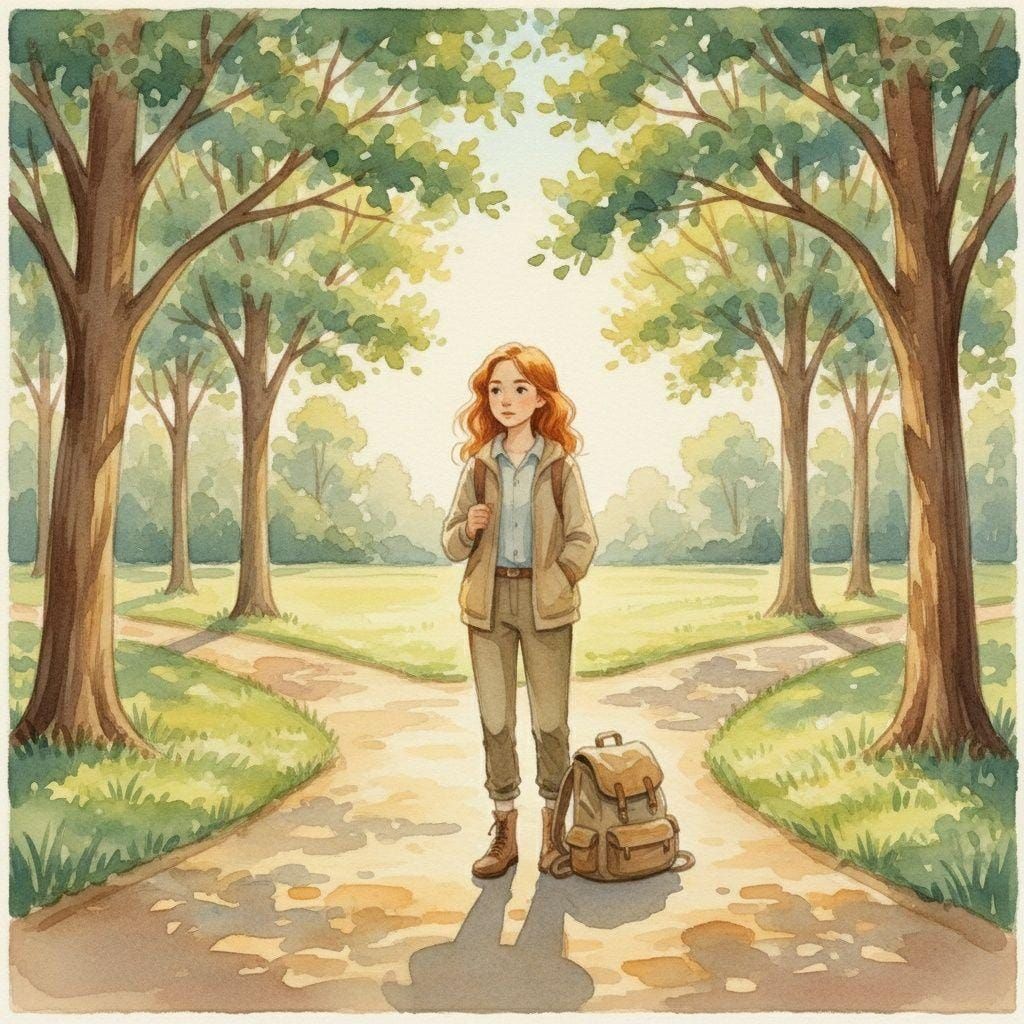
She was sixteen the year everyone handed her a map of a country she was already standing in, and not one of the people drawing it had ever been there.
I think about her sometimes, the woman she became, because she got out, and the getting out took her most of two decades, and the country was only this: that she wanted someone. That was the whole landmass. An ordinary fact, the same fact that has been arriving in human chests since there were chests, no stranger than being hungry, no more a problem than weather. But she did not get to find that out for herself, slowly, the way you are supposed to find things out. The maps got there first. They always do. They were waiting in the magazines on the drugstore rack and in the folklore the older girls passed down at the lockers and in the long shadow of a doctor in Vienna who had decided a century earlier that a woman wanting anything was a symptom of having wanted her father, and what all of those maps agreed on, despite agreeing on nothing else, was that the country was dangerous and that she should not trust her own feet in it.
Below the line: the three maps that cost her twenty years, the doctor in Vienna whose name nobody remembers but everyone still obeys, and the spring afternoon when a fifteen-year-old asked her the question — and she felt her own hand move toward the drawer before she'd decided anything.
Where the country turns out to be just home.