The System We Built and the Beast That Ate It

Joe Zeigler
Summary: After World War II, the United States built an international system—Bretton Woods, the Marshall Plan, NATO—that made America rich and kept the peace for eighty years. We didn't do it as charity; we did it because stability served our interests. Now PrumpTutin is systematically destroying it. Trump has undermined NATO, launched trade wars against allies while sparing Russia, gutted USAID, killed Voice of America and Radio Free Europe, and handed Putin a Ukraine "peace plan" negotiated through Kremlin channels. Global confidence in America has collapsed to Xi Jinping levels. We built something extraordinary. PrumpTutin is tearing it down.
In 1945, the United States sat atop the ruins of civilization with a choice to make. We could take our winnings and go home—become the world's largest fortress, armed to the teeth, watching the rest of humanity claw its way back from the rubble. Or we could do something no conquering power had ever really tried: build a system.
We chose the system.
Not out of charity. Not because Americans in 1945 were better people than Americans in 2025. We did it because the men who'd lived through two world wars and a depression had learned something the hard way: isolation is a fantasy, and the alternative to cooperation is chaos. The chaos that killed tens of millions in six years.
What they built lasted eight decades. It made the United States the richest and most powerful nation in human history. It kept the great powers from going at each other's throats. It wasn't perfect—nothing human ever is—but it worked.
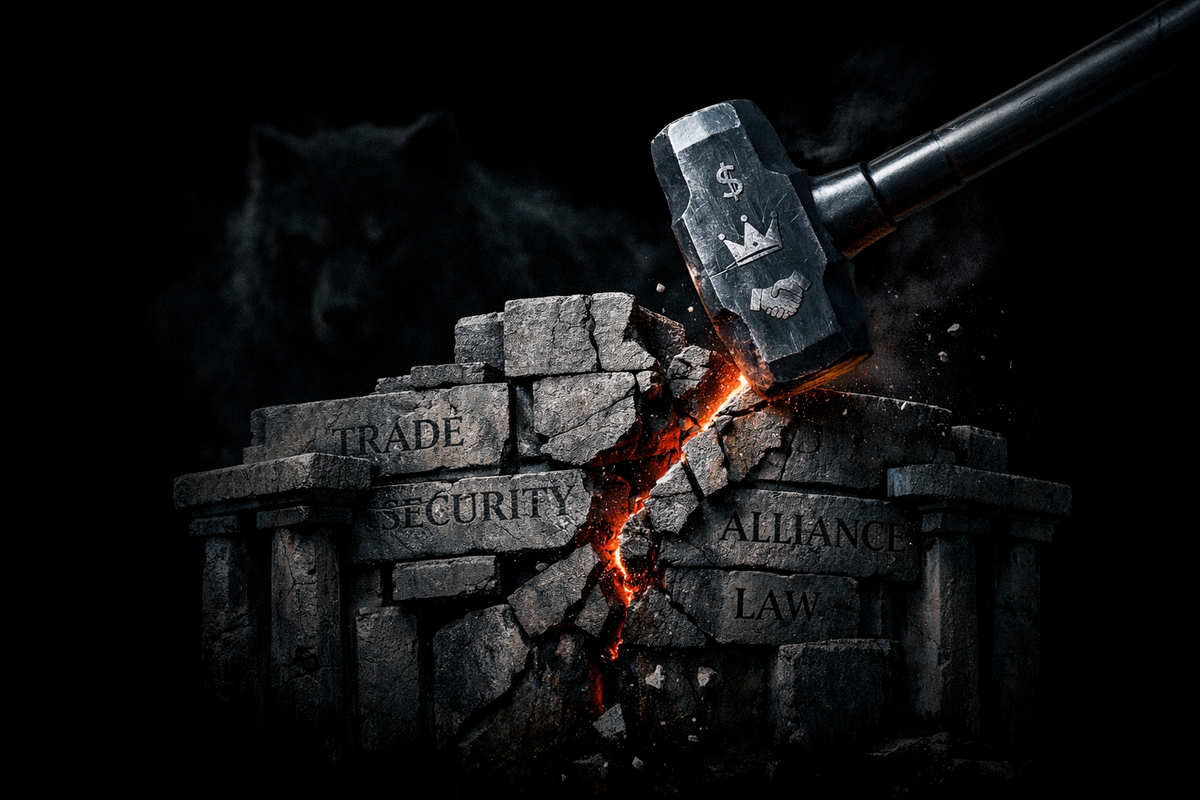
Now PrumpTutin is taking a sledgehammer to it. And if you think that hurts Europe more than it hurts us, you haven't been paying attention.
The Architecture of Peace
Start with Bretton Woods. In July 1944, while soldiers were still dying on beaches and in hedgerows, delegates from forty-four nations gathered at a hotel in New Hampshire to design the postwar economy. The United States had leverage—we had the money, the factories, the gold—and we used it to build institutions that would tie everyone together, including ourselves.
The International Monetary Fund would keep currencies stable and lend to countries in crisis. The World Bank would finance reconstruction and development. The General Agreement on Tariffs and Trade—later the World Trade Organization—would lower barriers and settle disputes. The dollar became the world's reserve currency, pegged to gold at thirty-five dollars an ounce.
Was this altruism? Of course not. American companies needed customers. If Europe stayed broke, who would buy our goods? If currencies fluctuated wildly, who could plan a business? If every nation threw up tariff walls the way they had in the 1930s—remember Smoot-Hawley—everyone would be poorer. Including us.
Then came the Marshall Plan. Between 1948 and 1952, the United States shipped about thirteen billion dollars to Western Europe—well over a hundred billion in today's money. It rebuilt factories, restored infrastructure, fed hungry people. It also forced European nations to cooperate with each other. To get Marshall Plan money, you had to work with your neighbors. The habits of cooperation that created the European Union started there.
By 1952, every recipient economy had surpassed prewar levels. Trade between the United States and Western Europe exploded. American investors found stable, growing markets. The middle class—both theirs and ours—expanded.
But you can't have economic cooperation without security. A Europe terrified of Soviet tanks wouldn't invest in factories. Which brings us to NATO.
The Shield
The North Atlantic Treaty Organization was created in 1949—the first peacetime military alliance the United States had ever joined outside the Western Hemisphere. That's how scared people were of what Stalin might do next.
The heart of NATO is Article 5: an attack on one member is an attack on all. Western Europe sheltered under the American nuclear umbrella. Any Soviet move against Paris or Bonn or Copenhagen would mean war with Washington. The doctrine of "massive retaliation" made the prospect so terrifying that nobody wanted to test it.
Europeans benefited enormously from this arrangement. They rebuilt their societies without spending ruinous amounts on defense. They developed generous social programs while we maintained the arsenal. That's a legitimate gripe, and American presidents from Eisenhower onward have complained about burden-sharing.
But the grumblers miss something: the United States benefited too. Massively.