What Actually Went Right in 2025

Here's the thing about doom-scrolling through another year: you miss the moments when something actually worked.
Amid cascading crises and political theater, 2025 delivered a handful of real victories. None erased the damage of the last decade. None redeemed the system. But they proved something harder to deny—that when humans stop breaking things on purpose, systems recover.
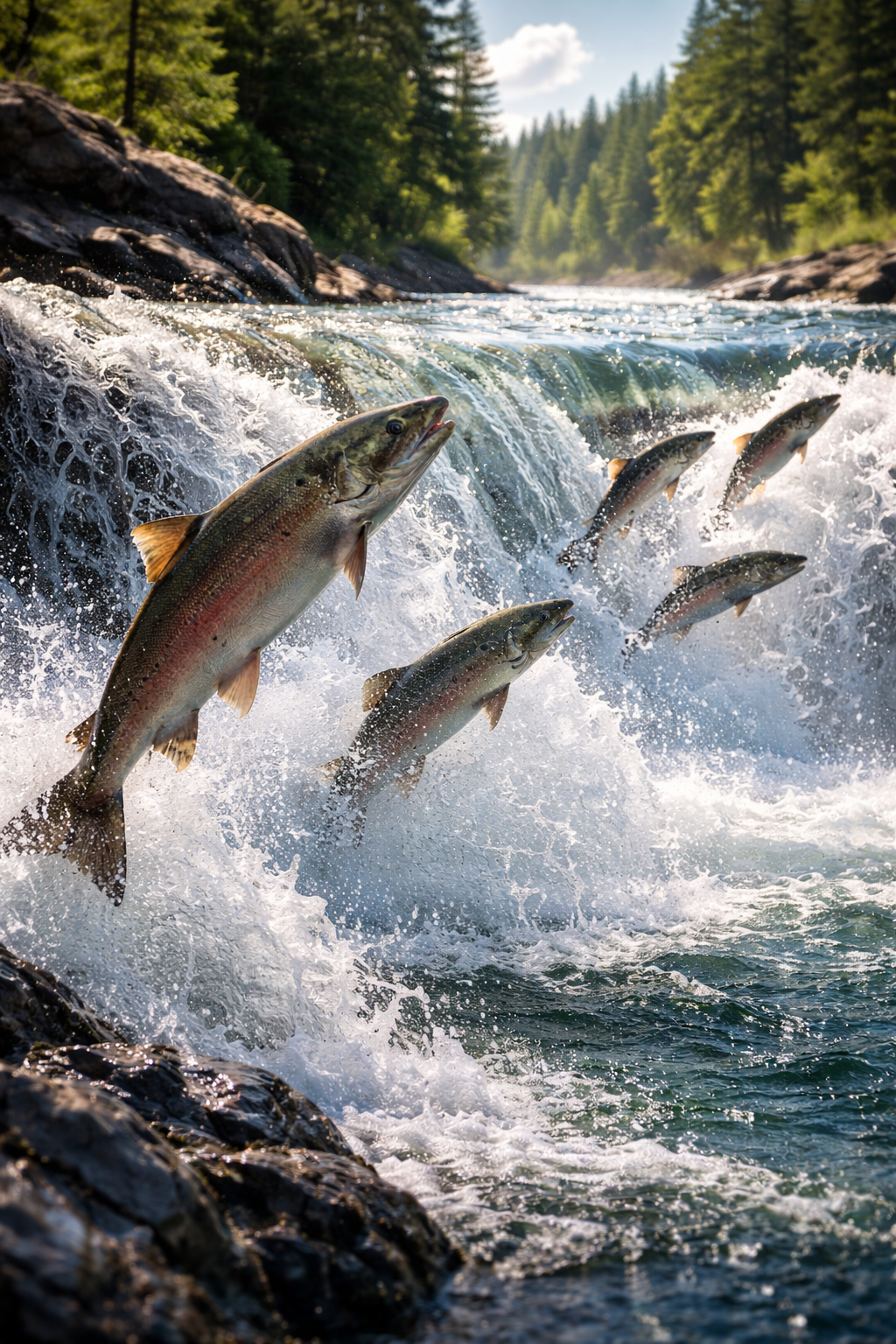
The Salmon Came Home
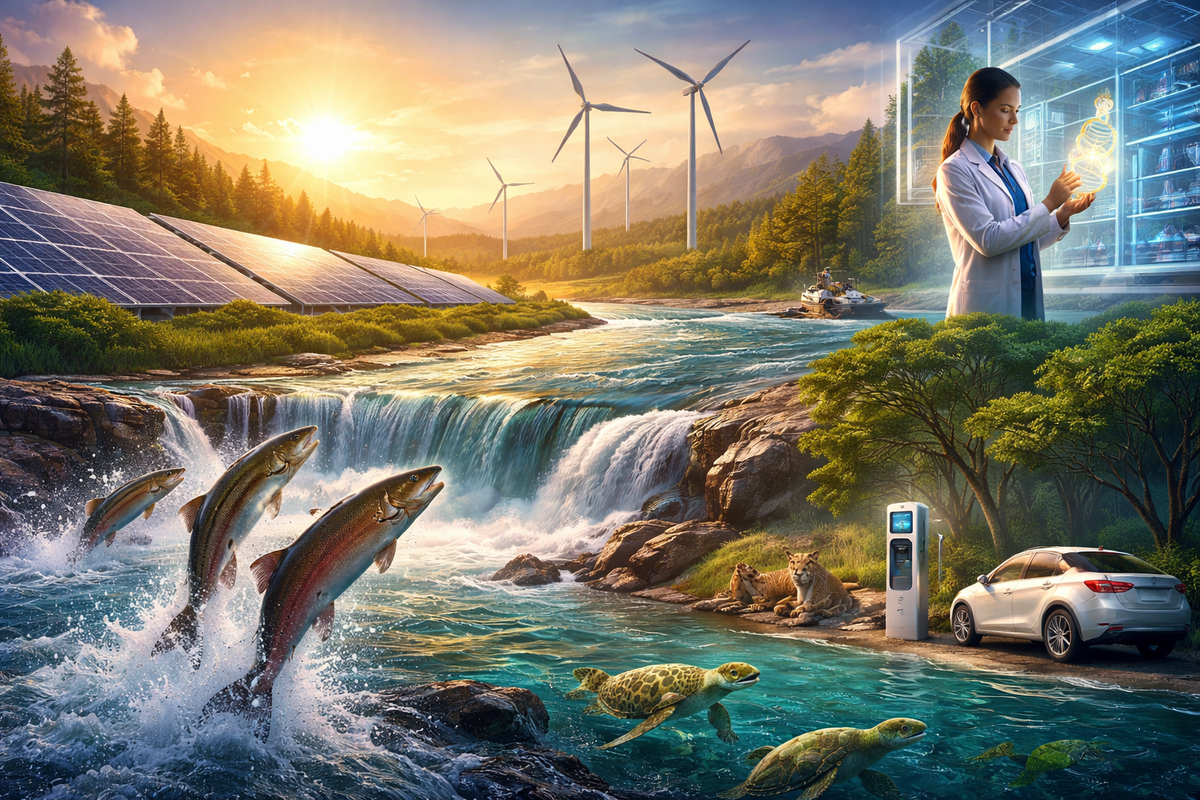
In 2025, Chinook salmon swam 360 miles up the Klamath River, reaching the Williamson and Sprague rivers above Upper Klamath Lake for the first time since 1912. Four generations of Klamath Tribal members lived and died without seeing it. Their treaty rights existed on paper, not in water.
Four dams came down in 2024—the largest river restoration project in United States history. Critics said the fish wouldn't return. By October 2025, more than 10,000 Chinook had passed the former Iron Gate Dam site. Water temperatures dropped. Toxic algae nearly vanished. The river, as one scientist put it, "came alive almost instantly."
William Ray Jr., chairman of the Klamath Tribes, said it plainly: "All those elders and all those generations that didn't get to see this happen—they didn't get to see their victory."
The salmon did what salmon have always done when the barriers came down. They went home.
The Sun Won
Science named it the Breakthrough of the Year: renewable energy finally outpaced coal—not symbolically, but structurally.
Global renewable capacity grew by a record 793 gigawatts. Solar rose 31 percent in the first half of the year. China now manufactures roughly 80 percent of the world's solar panels and 70 percent of its wind turbines, adding more clean energy in one year than the United States has installed in total. Its emissions appear to have plateaued.
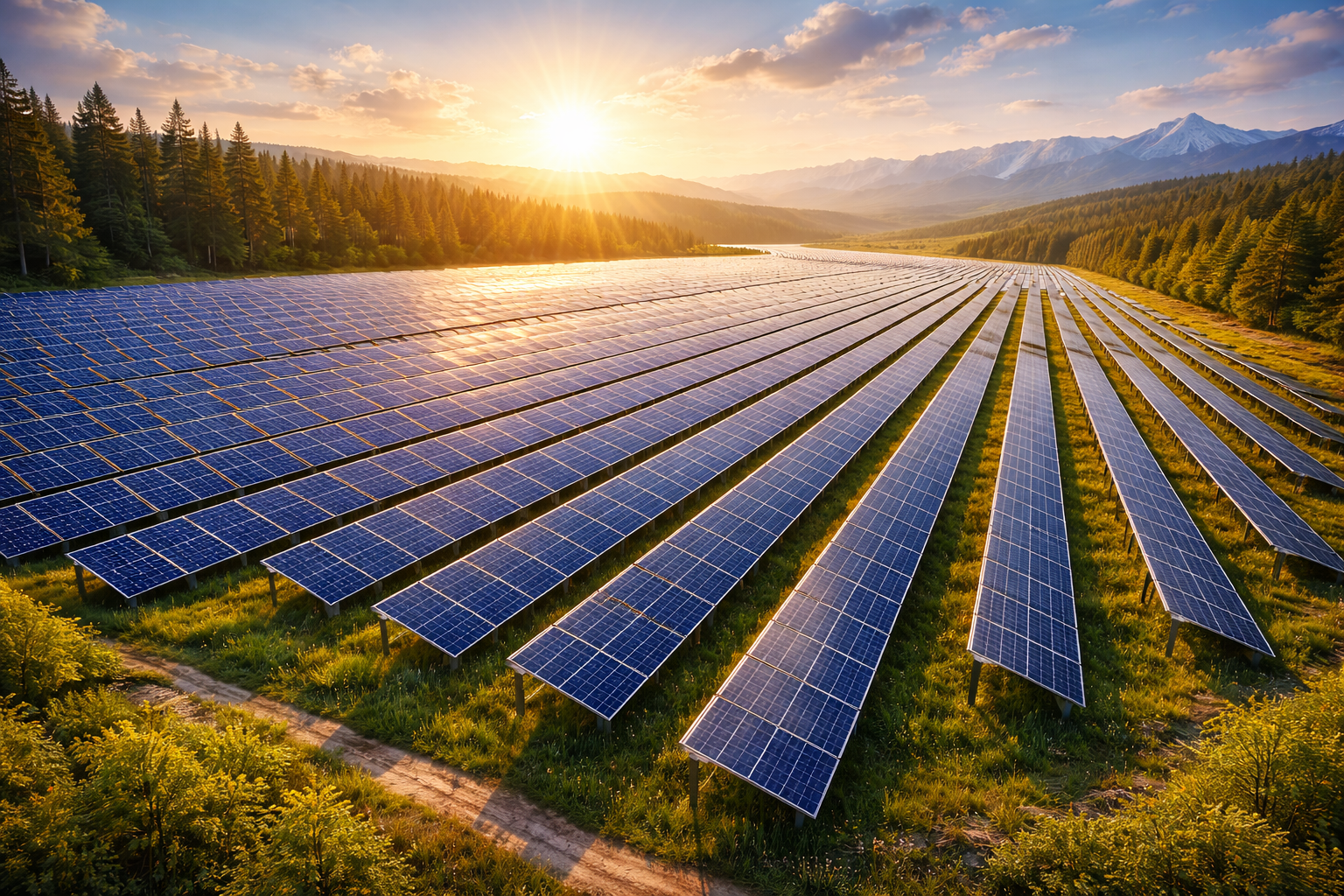
In California, solar became the largest source of electricity. In Britain, wind and solar crossed 50 percent of generation. In Brazil, they reached a third. Across the European Union, solar briefly became the single largest power source.
Norway is on track to go fully electric for new cars in 2025. Nearly 89 percent of vehicles sold there last year were electric. No miracles. Just consistent policy: high taxes on combustion engines, no import duties on electrics, and no ideological tantrums.
It worked.
People Stopped Dying at the Same Rate
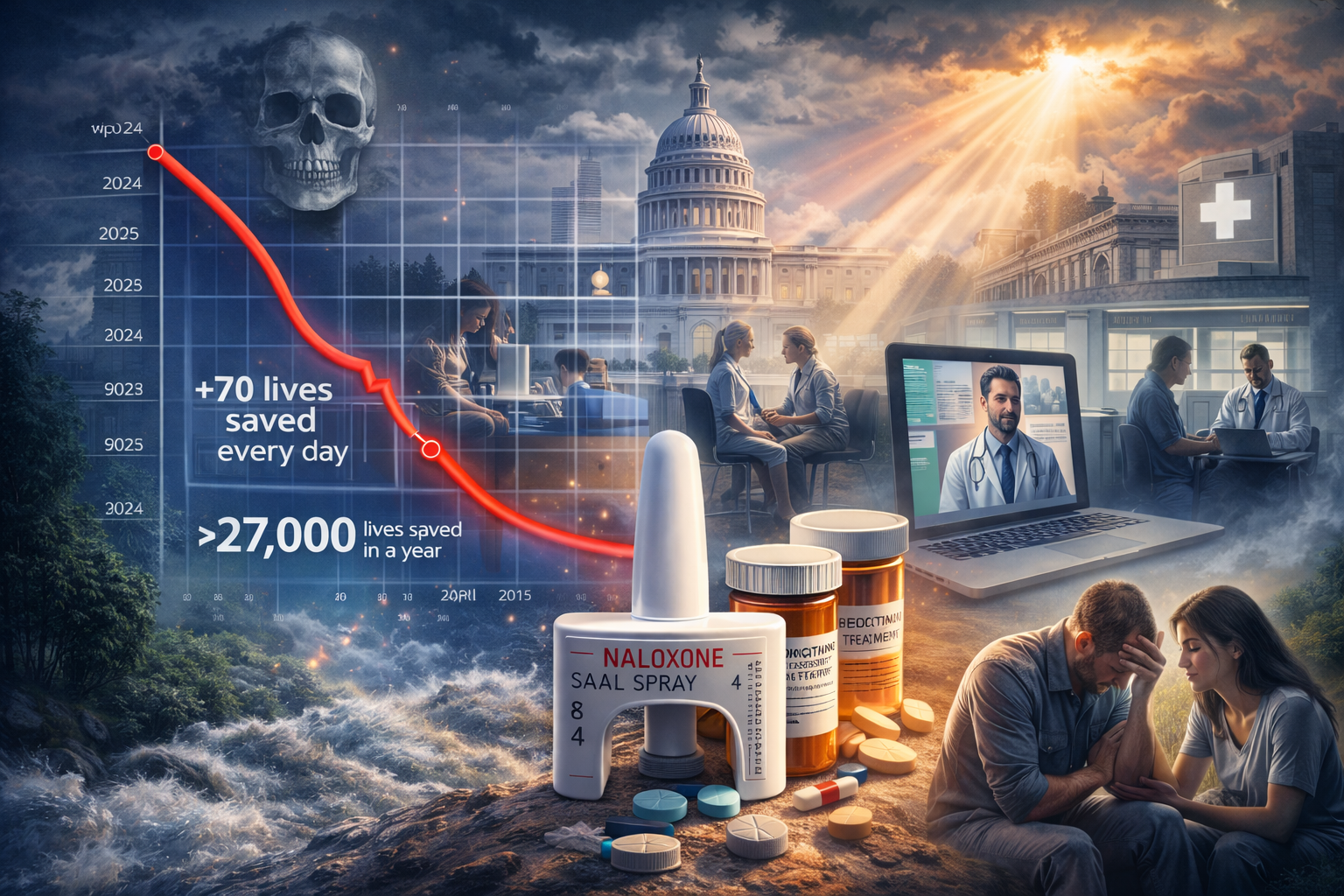
For the first time in decades, overdose deaths in the United States fell sharply—nearly 25 percent year over year through April 2025. That's more than 70 lives saved every day. More than 27,000 in a year.
Nothing miraculous happened. States expanded medication-assisted treatment. Telehealth for addiction care stayed legal. Naloxone became easy to find. Texas and Massachusetts folded addiction treatment into primary care instead of isolating it in bureaucratic corners.
The crisis isn't over. Overdose remains the leading cause of death for Americans aged 18 to 44. But the curve bent—not because of moral awakening, but because policy finally aligned with evidence.
Medicine Did Things It Wasn't Supposed To
In February, doctors treated a baby named KJ Muldoon with the world's first personalized CRISPR therapy. A single mutation had caused lethal ammonia buildup. Scientists edited it out. He's home now, learning to walk.
Doctors performed the first successful bladder transplant. Gene therapy restored hearing in people born deaf. An experimental drug showed real promise against Huntington's disease. Studies linked shingles vaccination to reduced dementia risk. Researchers identified early markers for pancreatic cancer—and drugs that may stop it before it starts.
The U.S. obesity rate fell to 37 percent, down from nearly 40 in 2022. Heart attack deaths continued to decline—what one researcher called "a medical miracle built from boring persistence."
The FDA began approving drugs without mandatory animal testing, replacing it with computer modeling and organ-on-chip systems. Faster. Cheaper. More humane.
This is what progress looks like when it's allowed to function.
The Amazon Breathed Again

Deforestation in Brazil fell for the fourth straight year, reaching an eleven-year low. Since Lula returned to office in 2023, forest loss has dropped by half.
The area destroyed between August 2024 and July 2025 still measured roughly 5,800 square kilometers—nearly four times the size of Greater London. But it was the lowest since 2014. The Cerrado followed the same trend.
This didn't happen through slogans. It happened through enforcement, satellite monitoring, restored agencies, and a government that decided forests were worth more standing than burned.
Fires still came. In 2024, they burned an area the size of Costa Rica. In 2025, burned land fell 45 percent. The drought eased. The work continued.
Species Came Back
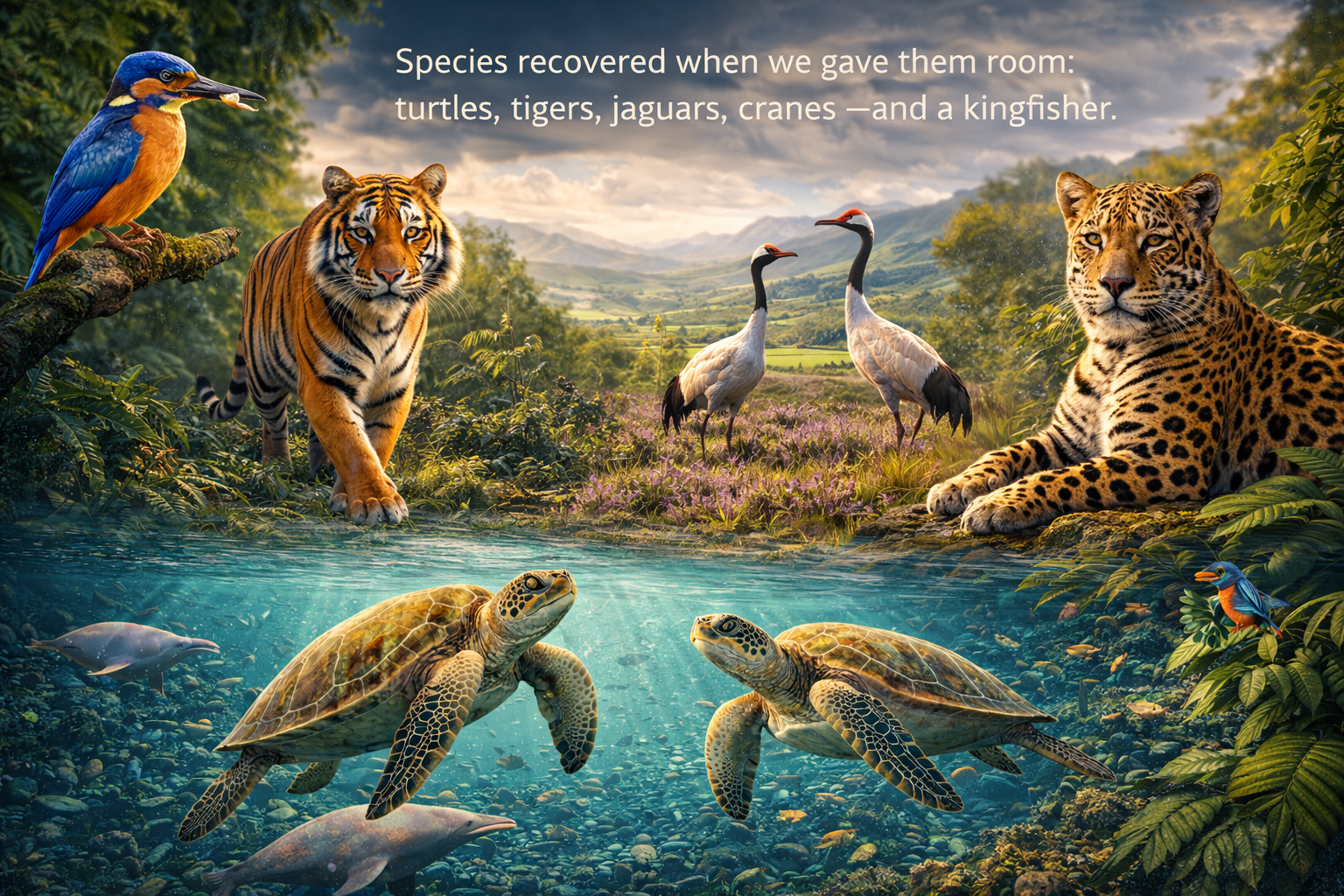
Green sea turtles were removed from the endangered list after decades of protection. Their population rose nearly 30 percent.
India's wild tiger population doubled in a decade. A kingfisher nested in the wild on Guam for the first time in forty years. Cranes returned to Scotland after being hunted to extinction. Jaguar populations surged in Mexico.
When we stop killing things and tearing apart their habitat, they recover. It isn't magic. It's restraint.
The High Seas Got a Law
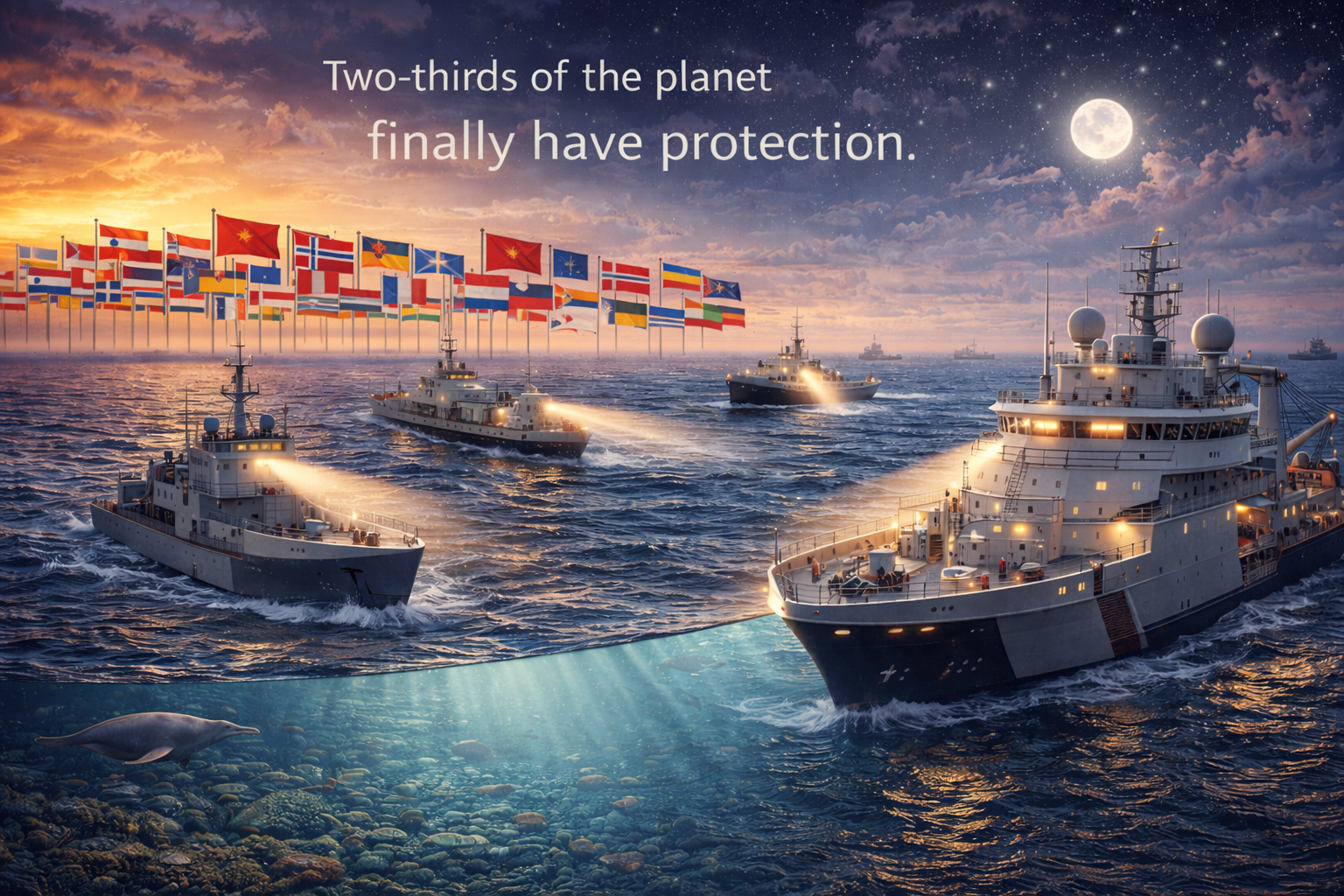
For decades, two-thirds of the planet belonged to no one and everyone. The high seas were stripped because nothing stopped anyone from doing it.
In September, Morocco became the 60th nation to ratify the High Seas Treaty, triggering its entry into force in January 2026. For the first time, there will be a legal framework to protect international waters.
The treaty mandates environmental impact assessments and creates mechanisms to share marine genetic resources. Enforcement will be hard. The United States and China haven't ratified. Russia and Japan didn't sign.
But the law exists. For the first time in human history, half the planet has a chance at protection.
What It Means
None of this solves climate change. None of it cures authoritarianism. None of it guarantees safety.
But it proves something essential: when we stop sabotaging ourselves, systems recover.
We already know what works.
The only question left is whether we're willing to keep doing it.